Guduchi & Tulsi: Ayurvedic Pillars for Monsoon Resilience
⏱ 12 min read·Updated Aug 2026·0% read

Navigating Monsoon Wellness with Guduchi and Tulsi
During the monsoon season, when the body's natural defenses may be challenged, Ayurvedic herbs like Guduchi (Giloy) and Tulsi traditionally support the body's natural immune response. These revered botanicals are valued for their properties that help balance aggravated doshas and strengthen Agni, the digestive fire, which is crucial for maintaining overall well-being during this humid period. Ayurveda recognizes the monsoon, or Varsha Ritu, as a time when Agni naturally weakens, Vata accumulates, and Kapha begins to build, making the body more susceptible to imbalances and seasonal discomforts.
Guduchi (Tinospora cordifolia), known as 'Amrita' or 'nectar' in Sanskrit, is a climbing shrub with a long history in Ayurvedic texts like the Charaka Samhita, where it is classified as a Medhya Rasayana, traditionally associated with intellect, memory, and graceful aging. Tulsi (Ocimum sanctum), or Holy Basil, is equally revered as the 'Queen of Herbs' and a Rasayana, traditionally supporting vitality and longevity. Both herbs are traditionally integrated into seasonal routines (Ritucharya) to help the body adapt to environmental changes and maintain internal harmony.
Ayurvedic Support for Monsoon Season
- Supports a balanced immune response. Guduchi is traditionally valued for its adaptogenic and immunomodulatory properties, which may help the body maintain its natural resilience against environmental changes. Its traditional use is in promoting overall health and strengthening the immune system.
- Promotes comfortable respiratory function. Tulsi is traditionally recognized for its beneficial effects on respiratory health, helping to clear Kapha accumulation and support healthy, uncongested breathing. Its warming potency is traditionally used to liquefy phlegm and open respiratory channels.
- Aids healthy digestion and detoxification. Both Guduchi and Tulsi are traditionally used to support Agni, the digestive fire, which tends to weaken during monsoon. Guduchi helps to burn ama (accumulated toxins) and strengthens digestion, while Tulsi's pungent and bitter tastes traditionally assist in clearing toxins and supporting gut health.
- Supports the body's natural ability to manage stress. Tulsi, as an adaptogenic herb, is traditionally used to help the body cope with stress, promoting mental clarity and a sense of calm. This adaptogenic quality is particularly valuable when the body faces seasonal challenges.
The Ayurvedic Perspective: Energetics of Monsoon Herbs
During the monsoon (Varsha Ritu), Vata dosha becomes aggravated, and Kapha dosha begins to accumulate, while Agni (digestive fire) naturally weakens. This creates an environment where the body's natural defenses may be challenged. Guduchi and Tulsi are traditionally chosen to counteract these imbalances through their specific Ayurvedic properties.
Guduchi (Tinospora cordifolia) possesses a rasa (taste) that is bitter (Tikta), astringent (Kashaya), and pungent (Katu). Its virya (potency) is heating (Ushna), while its vipaka (post-digestive effect) is sweet (Madhura). These energetics allow Guduchi to traditionally balance all three doshas, with a particular affinity for pacifying Pitta and Kapha due to its bitter and astringent tastes, and supporting Vata through its sweet vipaka and unctuous (Snigdha) guna. It is described in classical texts like the Charaka Samhita for its role in supporting strength and healthy aging (Vayasthapana).
Tulsi (Ocimum sanctum) has a rasa of pungent (Katu) and bitter (Tikta), with a slightly sweet undertone. Its virya is heating (Ushna), and its vipaka is pungent (Katu). Tulsi's qualities (gunas) are light (Laghu) and dry (Ruksha). These properties traditionally help pacify Kapha and Vata doshas, while its heating nature suggests moderation for Pitta types. Tulsi is traditionally found in various classical Ayurvedic formulations and is often taken as a decoction (kashaya) or with warm milk to enhance its Rasayana benefits, particularly during Kapha-prone seasons like monsoon.
Traditional Usage Protocols
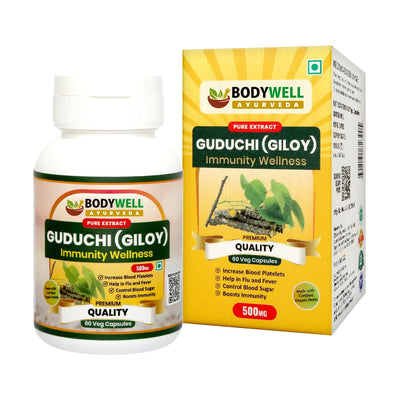
Incorporating Guduchi and Tulsi into one's monsoon routine can be done in various traditional forms, always with attention to individual doshic constitution and professional guidance. For Guduchi, the stem is the most commonly used part. A traditional dosage of Guduchi powder (churna) is 3-6 grams per day, divided into doses, often taken with warm water. For a decoction (kashaya), 1 tablespoon of Guduchi powder can be boiled in 2 cups of water until reduced to half a cup, then filtered and consumed once daily. Guduchi capsules, such as BodyWell Ayurveda’s Giloy (Guduchi) Capsules, are also a convenient option, typically 1-2 capsules twice daily after meals.
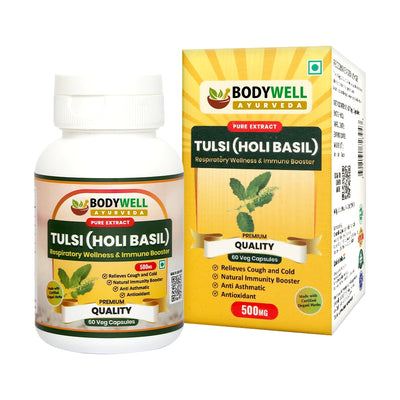
Tulsi can be consumed as fresh leaves, with a traditional recommendation of 5-7 fresh leaves daily, preferably on an empty stomach. Tulsi tea, prepared by steeping 2-3 grams of dried leaves in hot water for 5-10 minutes, can be consumed 1-3 cups daily. Tulsi powder can be taken as ½ teaspoon daily with warm water. BodyWell Ayurveda also offers Tulsi Capsules for those seeking a standardized form. For both herbs, it is crucial to consult a qualified Ayurvedic practitioner or a registered doctor, especially for individuals who are pregnant, nursing, or on ongoing medication, to determine appropriate dosages and avoid potential interactions.
Common Questions on Monsoon Wellness
Q: Why is immunity particularly challenged during the monsoon season?
A: Ayurveda explains that during monsoon (Varsha Ritu), digestive fire (Agni) naturally weakens, while Vata dosha accumulates and Kapha dosha begins to build. This combination can lead to an internal environment where the body's natural defenses may be challenged, making it traditionally a period for enhanced seasonal care.
Q: Can Guduchi and Tulsi be taken together?
A: Yes, Guduchi and Tulsi are often traditionally combined in Ayurvedic practice due to their synergistic properties that support overall well-being. Both are considered Rasayana herbs, and their combined use is traditionally valued for balancing doshas and supporting vitality, particularly during seasonal transitions like monsoon.
Q: What is the best time of day to consume these herbs for monsoon support?
A: Traditionally, many Ayurvedic herbs for daily wellness, including Guduchi and Tulsi, are recommended in the morning on an empty stomach to optimize absorption and their effects on Agni. However, specific recommendations can vary based on individual needs and the form of the herb, so consulting a practitioner is advised.
Q: Are there any dietary considerations when using Guduchi and Tulsi during monsoon?
A: During monsoon, Ayurveda traditionally recommends a diet of warm, light, and freshly cooked foods to support weakened Agni. Avoiding cold, heavy, and raw foods is generally advised. Incorporating warming spices and consuming Guduchi and Tulsi with warm water or honey can complement these dietary guidelines.
Q: Who should exercise caution when considering Guduchi and Tulsi?
A: Individuals who are pregnant, breastfeeding, have autoimmune conditions, or are taking medications (especially blood thinners or blood sugar-lowering drugs) should consult a qualified Ayurvedic practitioner or a registered doctor before using Guduchi and Tulsi. These herbs may have specific effects that require professional guidance.