Ayurvedic Approaches to Psoriasis: Restoring Skin Harmony
⏱ 18 min read·Updated Aug 2026·0% read
 Ayurveda offers a holistic framework for supporting individuals with psoriasis, viewing it as a manifestation of internal doshic imbalances, particularly Vata and Kapha, often exacerbated by Pitta. This ancient system, rooted in classical texts like the Charaka Samhita, emphasizes detoxification, personalized dietary adjustments, herbal remedies, and lifestyle modifications to help restore the body's natural equilibrium and promote skin wellness. In Ayurveda, psoriasis is often correlated with 'Kitibha' or 'Ekakustha,' classified under 'Kshudra Kushta' (minor skin diseases), though it can also share features with 'Sidhma Kushta' under 'Mahakustha' (major skin diseases). These conditions are traditionally understood to arise from vitiation of all three doshas, primarily Vata and Kapha, along with the involvement of Rakta (blood), Mamsa (muscle tissues), and Lasika (lymph or plasma) Dhatus.
Ayurvedic Principles for Skin Comfort
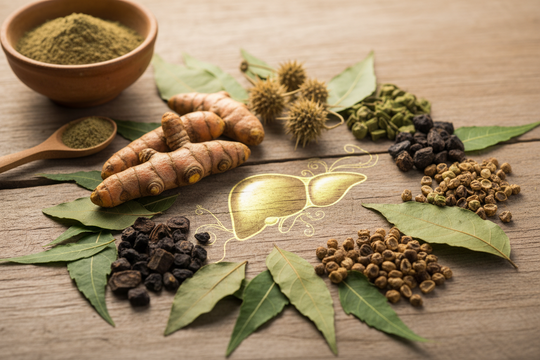
- Supports balanced inflammatory responses: Ayurvedic herbs like Turmeric (Haridra) and Neem (Azadirachta indica) are traditionally valued for their properties that may help maintain healthy inflammatory pathways in the body. Turmeric, containing curcumin, is recognized for its role in modulating inflammation, which is beneficial for skin conditions. Neem is traditionally considered a powerful purifier and anti-inflammatory agent, helping to soothe irritated skin and reduce redness.
- Aids in natural detoxification pathways: Manjistha (Rubia cordifolia) is a revered Ayurvedic herb traditionally used to support blood purification and lymphatic drainage, which is crucial for managing skin health. It is believed to help clear deep-seated toxins (Ama) that can contribute to skin imbalances.
- Supports healthy skin barrier function and hydration: Medicated oils and topical applications, such as those containing Aloe Vera (Kumari) and Coconut oil, are traditionally used to nourish the skin, reduce dryness, and support the skin's natural barrier. Aloe Vera, with its cooling and soothing properties, may help alleviate itching, dryness, and irritation associated with skin conditions.
- Promotes a calm and balanced mood: Stress and anxiety can often trigger or worsen skin flare-ups. Ayurvedic practices like meditation and Pranayama (controlled breathing techniques) are traditionally recommended to help manage stress, thereby supporting overall well-being and potentially reducing the impact of stress on skin health.
The Ayurvedic Perspective: Balancing Doshas for Skin Vitality
In Ayurveda, psoriasis is primarily understood as a result of vitiated Vata and Kapha doshas, often with a significant involvement of Pitta. Vata dosha contributes to the characteristic dryness, flaking, and scaling of the skin, while Kapha dosha manifests as thickening, itching, and chronic nature of the plaques. Pitta dosha, when aggravated, leads to inflammation, redness, and a burning sensation.
The Ayurvedic properties (Rasa, Virya, Vipaka, Guna) of herbs used in supporting skin health are carefully considered. For instance, bitter (Tikta) and astringent (Kashaya) tastes are often preferred for their purifying effects, while cooling (Sheeta Virya) potency helps pacify Pitta. Herbs with light (Laghu) and dry (Ruksha) qualities may help reduce Kapha accumulation. Traditional Ayurvedic formulations like Arogyavardhini Vati and Kaishore Guggulu are classically indicated for skin disorders due to their ability to support liver function, detoxify the body, and balance doshas. Manjistha (Rubia cordifolia), with its bitter (Tikta) and sweet (Madhura) rasa, cooling (Sheeta Virya) potency, and pungent (Katu Vipaka) post-digestive effect, is a prime example of an herb traditionally valued for its Rakta-shodhaka (blood purifying) properties.
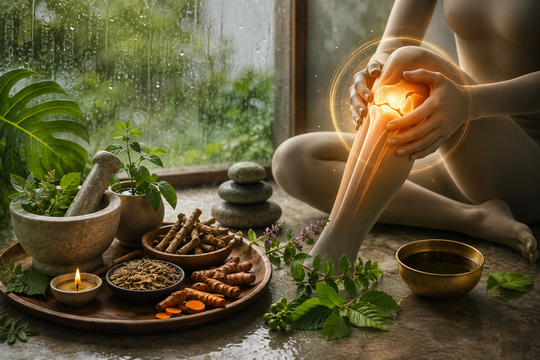
Traditional use often involves a multi-pronged approach, including internal and external therapies. Panchakarma therapies like Virechana (therapeutic purgation) and Basti (medicated enema) are traditionally employed to eliminate accumulated toxins and balance doshas. External applications like Lepa (herbal pastes) made from Neem, Turmeric, or Sandalwood, and medicated oils such as Mahamarichyadi Tailam, Khadiradi Taila, or Pinda Taila, are used to soothe inflamed skin, reduce itching, and promote healing. Dinacharya (daily regimen) and Ritucharya (seasonal regimen) guidance are also crucial, emphasizing practices like Abhyanga (oil massage) with specific oils to nourish the skin and pacify Vata.
How to Use Ayurvedic Support for Skin Health
Ayurvedic support for skin health, particularly in conditions like psoriasis, is highly individualized and should always be guided by a qualified Ayurvedic practitioner or registered doctor. Internal herbal formulations may be prescribed in various forms, such as churna (powder), vati (tablets), or kashaya (decoction). For example, a churna of Neem or Manjistha might be taken with warm water, typically 1-3 grams, once or twice daily, depending on the individual's constitution and the practitioner's recommendation.
Topical applications often include medicated oils like coconut oil infused with specific herbs, or herbal pastes. These oils can be gently massaged into affected areas daily, preferably warmed, and left on for at least an hour or overnight before bathing with a gentle herbal cleanser. Dietary modifications are also vital, often involving avoiding incompatible food combinations (Viruddha Ahara) such as fish and milk, and reducing sour, salty, and fermented foods, which can aggravate Pitta and Kapha. Instead, a diet rich in bitter vegetables, easily digestible meals, and plenty of lukewarm water is generally recommended.
It is essential to consult a qualified Ayurvedic practitioner or a registered doctor before starting any Ayurvedic regimen, especially if you have a health condition, are pregnant, or are taking other medications.
FAQs
Q: How does Ayurveda explain the root cause of psoriasis?
A: Ayurveda views psoriasis as a manifestation of imbalanced Vata, Pitta, and Kapha doshas, particularly Vata and Kapha, which affect the skin, blood, and muscle tissues. This imbalance is often linked to impaired digestive fire (Agni) and the accumulation of toxins (Ama) in the body.
Q: Can dietary changes truly influence psoriasis symptoms in Ayurveda?
A: Yes, diet plays a crucial role in Ayurvedic management of psoriasis. Specific dietary recommendations focus on pacifying aggravated doshas and reducing Ama, such as avoiding sour, salty, and fermented foods, and emphasizing bitter vegetables and easily digestible meals.
Q: What are some commonly used Ayurvedic herbs for skin wellness in psoriasis?
A: Herbs like Neem, Turmeric, Manjistha, and Aloe Vera are traditionally valued in Ayurveda for their properties that support skin health. They are often used to help maintain healthy inflammatory responses, aid detoxification, and nourish the skin.
Q: Is Panchakarma therapy suitable for everyone with psoriasis?
A: Panchakarma, a series of detoxification therapies, is often recommended in Ayurveda for psoriasis, but its suitability depends on the individual's constitution, the severity of the condition, and overall health. It should only be performed under the strict guidance of a qualified Ayurvedic practitioner.
Q: How important is stress management in Ayurvedic care for psoriasis?
A: Stress is recognized as a significant trigger for psoriasis flare-ups in both Ayurvedic and modern perspectives. Ayurvedic practices such as yoga, meditation, and Pranayama are highly emphasized to help manage stress and promote a calm, balanced mood, thereby supporting overall skin health.