Abhyanga: Monsoon Joint & Muscle Comfort Through Self-Care
⏱ 8 min read·Updated Aug 2026·0% read

Introduction
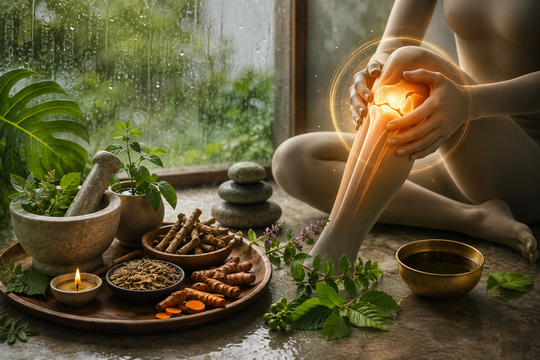
Daily Abhyanga, the Ayurvedic practice of warm oil self-massage, traditionally supports joint and muscle comfort during the monsoon season by pacifying aggravated Vata dosha. The unctuous, warming qualities of the oil counteract the cold, dry, and mobile attributes of Vata, which tend to increase with the humidity and fluctuating atmospheric pressure of the rainy season, promoting flexibility and ease of movement. This classical practice, deeply rooted in texts like the Charaka Samhita and Ashtanga Hridaya, is a foundational component of Dinacharya (daily routine) in Ayurveda, emphasizing proactive self-care for maintaining holistic health.
Key Benefits of Monsoon Abhyanga
- Supports comfortable joint movement and flexibility. The monsoon season, known as Varsha Ritu, often sees an aggravation of Vata dosha due to increased humidity, coolness, and fluctuating atmospheric pressure. Abhyanga, with its warm and unctuous qualities, helps to lubricate the joints, counteracting the dryness and stiffness associated with elevated Vata, thereby supporting smoother articulation and ease of movement.
- Promotes muscle relaxation and eases physical discomfort. The rhythmic strokes of Abhyanga, particularly with warming oils, help to soothe muscle tension that can arise from changes in weather and increased Vata. This practice encourages gentle release of tightness, contributing to a sense of physical comfort and reducing feelings of fatigue.
- Nourishes the skin and underlying tissues. Abhyanga involves applying warm oil, which is traditionally believed to penetrate the seven layers of skin (Sapta Twak) and progressively nourish the deeper body tissues (Dhatus). This external oleation helps to maintain skin hydration and integrity, which can be compromised by Vata's dry qualities, especially during seasonal transitions.
- Supports a calm and grounded nervous system. The systematic, warm oil application inherent in Abhyanga has a profoundly grounding and calming effect on the nervous system. This is particularly beneficial during the monsoon, as increased Vata can lead to feelings of restlessness or an overactive mind, and Abhyanga helps to cultivate a sense of inner stability and mental ease.
The Ayurvedic Perspective on Monsoon Abhyanga
During the monsoon (Varsha Ritu), Ayurveda identifies a natural increase in Vata dosha, characterized by qualities of dryness (ruksha), coldness (shita), lightness (laghu), and mobility (chala). This seasonal aggravation of Vata is a primary contributor to joint and muscle discomfort, stiffness, and reduced flexibility. Abhyanga directly counters these Vata qualities through the therapeutic properties of warm oil. The oil itself possesses snigdha (unctuous), guru (heavy), and ushna (warming) gunas, which are opposite to Vata’s inherent attributes. This practice is classically prescribed in Dinacharya as a daily ritual to pacify Vata, as detailed in texts like the Charaka Samhita (Sutrasthana, Chapter 5) and Ashtanga Hridaya (Sutrasthana 2.8-9). The traditional anupana, or vehicle, for Abhyanga is warm medicated oil, which is absorbed through the skin, lubricating the sandhis (joints) and nourishing the Asthi Dhatu (bone tissue) and Majja Dhatu (bone marrow and nervous tissue), both of which are primarily governed by Vata. The application of oil also helps to prevent the depletion of Ojas, the subtle essence of vitality, which can be disturbed by Vata imbalances. Specific oils like sesame oil (Til Taila) are traditionally recommended due to their inherent warming and nourishing properties, making them ideal for Vata pacification during the monsoon.
How to Incorporate Abhyanga
To perform Abhyanga, select a suitable oil such as warm sesame oil (Til Taila) for its warming and Vata-pacifying qualities, or a medicated oil like Mahanarayan Taila, traditionally valued for supporting joint comfort. Gently warm about 1/4 to 1/2 cup of oil by placing the bottle in hot water for 5 minutes; the oil should be comfortably warm, not hot. Apply the oil generously to your entire body, starting from the extremities and working towards the center. Use long, flowing strokes on the limbs and circular motions over the joints. Pay particular attention to the head (Shirobhyanga), ears (Karna Abhyanga), and feet (Padabhyanga), as these are considered important sites for Vata balance. Massage for 10-20 minutes, allowing the oil to absorb, then follow with a warm bath or shower. Abhyanga is ideally performed daily in the morning before bathing, but even 3-4 times a week or a focused evening massage on the feet and scalp can provide benefits. Individuals with acute fever, severe congestion, active skin infections, or significant indigestion should avoid Abhyanga. Pregnant women, children, or those with ongoing medical conditions should consult a qualified Ayurvedic practitioner or registered doctor for personalized guidance before incorporating Abhyanga into their routine.
FAQs
Q: Why is monsoon considered a challenging season for joint comfort in Ayurveda?
A: Ayurveda identifies monsoon (Varsha Ritu) as a period when Vata dosha naturally aggravates due to the cold, damp, and windy conditions. This increased Vata can lead to dryness, stiffness, and discomfort in the joints, as Vata governs movement and lubrication within the body.
Q: What kind of oil is best for Abhyanga during the monsoon?
A: Warming, nourishing oils are generally preferred for monsoon Abhyanga to counteract Vata's cold and dry qualities. Sesame oil (Til Taila) is a classical recommendation due to its inherent warming properties, and medicated oils like Mahanarayan Taila are traditionally used for joint support.
Q: How long should I dedicate to an Abhyanga session?
A: A full-body Abhyanga typically takes 10-20 minutes to allow for adequate oil absorption and the therapeutic effects of massage. Even a shorter, focused massage of 5-7 minutes daily, particularly on the head, ears, and feet, can provide significant Vata-pacifying benefits. You may also find Ayurvedic Spring Rituals for Kapha Balance and Renewed Vitality helpful.
Q: Can Abhyanga replace modern medical treatments for joint conditions?
A: No, Abhyanga is a traditional Ayurvedic self-care practice that supports general well-being and may help maintain comfortable joint and muscle function. It is not a substitute for professional medical diagnosis or treatment of any disease or medical condition. Always consult a qualified Ayurvedic practitioner or registered doctor for specific health concerns.
Q: Are there any situations when Abhyanga should be avoided?
A: Yes, Abhyanga is generally not recommended during acute fever, severe congestion, active skin infections, indigestion, or immediately after a heavy meal. Pregnant women and individuals with specific health conditions should seek advice from an Ayurvedic practitioner or doctor.