Kutki for Monsoon: Ayurvedic Liver & Digestion Renewal
⏱ 8 min read·Updated Aug 2026·0% read

Introduction
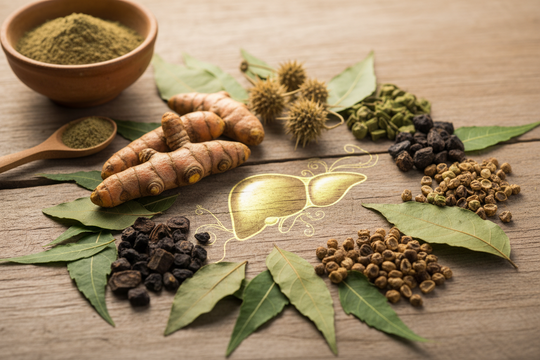
Kutki (Picrorhiza kurroa) is a potent Ayurvedic herb traditionally valued for its deep liver-cleansing and digestive-supportive properties, making it particularly beneficial during the monsoon season when internal digestive fire (Agni) naturally weakens and the body seeks extra purification. Known in Sanskrit as Katuki or Katukarohini, this herb is categorized in classical Ayurvedic texts like the Charaka Samhita as a Bhedaniya and Lekhaniya herb, indicating its traditional use for promoting purgation and scraping away toxins. Its profound impact on balancing Pitta and Kapha doshas positions it as a cornerstone for seasonal wellness.
Key Benefits for Monsoon Wellness
-
Supports healthy liver detoxification
Kutki is traditionally used to support the liver's natural detoxification processes, which can become sluggish during the humid monsoon season. Its active compounds, such as picrosides and kutkosides, are associated with promoting bile production and protecting liver cells from damage. This action helps the liver effectively filter accumulated toxins, a crucial function when the body's digestive and metabolic pathways are challenged by increased dampness and coolness in the environment. -
Promotes comfortable, regular digestion
The bitter taste of Kutki is traditionally valued in Ayurveda for stimulating a healthy digestive fire (Agni), which often diminishes during monsoon, leading to sluggishness and indigestion. By enhancing the secretion of digestive enzymes and bile, Kutki may help support efficient food breakdown and nutrient absorption, contributing to comfortable and regular bowel movements. This traditional use is supported by research indicating its role in improving digestive function. -
Aids in maintaining a balanced inflammatory response
Kutki is traditionally recognized for its properties that help maintain a healthy inflammatory response within the body. The monsoon season can sometimes exacerbate imbalances that lead to discomfort, and Kutki's cooling and purifying qualities are traditionally employed to help pacify aggravated Pitta dosha, which is often associated with heat and inflammation. Research highlights its potential in modulating inflammatory pathways. -
Supports immune system resilience
Traditionally, Kutki is used to support the body's natural immune defenses, which can be particularly important during the monsoon season when environmental changes may challenge overall well-being. Its properties are associated with enhancing the body's inherent resistance.
The Ayurvedic Perspective
In Ayurveda, Kutki is primarily known for its profound effects on Pitta and Kapha doshas. It is a potent Pitta pacifier due to its intense Tikta (bitter) taste and Sheeta Virya (cooling potency), which counteract the hot qualities of Pitta. Its Laghu (light) and Ruksha (dry) gunas, combined with a Katu Vipaka (pungent post-digestive effect), also help to reduce Kapha by drying excess moisture and clearing stagnation. While it generally balances Pitta and Kapha, excessive use may, in some individuals, aggravate Vata due to its drying qualities.
Kutki's traditional use is deeply rooted in classical Ayurvedic texts. The Charaka Samhita mentions Kutki for its Bhedaniya (purgative) and Lekhaniya (scraping) actions, particularly in formulations aimed at cleansing the body. The Sushruta Samhita and Ashtanga Hridaya also acknowledge its significance, often including it in groups of herbs that support liver health and digestion. Traditionally, Kutki is valued for its ability to clear Ama (toxins) from the body, especially from the liver and blood, a critical process during the monsoon when digestive fire is low and toxic accumulation can be higher. It is a key ingredient in classical formulations like Arogyavardhini Vati, which is traditionally used for comprehensive liver support. The traditional anupana (vehicle) for Kutki often involves warm water or honey, which helps to enhance its action and mitigate its intense bitterness.
How to Use Kutki
Kutki is commonly available in various forms, including churna (powder), capsules, and decoctions. For general liver and digestive support during monsoon, a typical adult dosage of Kutki churna is 500 mg to 1 gram, taken twice daily. It is often recommended to mix the powder with warm water or honey to help with its strong bitter taste and to facilitate absorption. For specific conditions or as a purgative, higher doses (2-4 grams) may be traditionally indicated, but this should only be undertaken under the direct supervision of a qualified Ayurvedic practitioner.
The best timing for Kutki is often in the early morning on an empty stomach to maximize its cleansing effects, though taking it after a light breakfast can be suitable for those with sensitive digestion. It is crucial to consult a qualified Ayurvedic practitioner or a registered doctor before incorporating Kutki, especially if you are pregnant, breastfeeding, have severe dehydration, peptic ulcers, diabetes, severe liver disease, autoimmune conditions, or are taking any ongoing medications, as it may interact with certain drugs or affect blood sugar levels.
FAQs
Q: What makes Kutki particularly useful during the monsoon season?
A: During the monsoon, the body's digestive fire (Agni) naturally weakens, and humidity can lead to an accumulation of Kapha and Pitta doshas. Kutki's bitter taste and cooling potency help to rekindle Agni, cleanse the liver, and balance these aggravated doshas, supporting the body's natural detoxification and digestive processes.
Q: How does Kutki support liver health in Ayurvedic terms?
A: In Ayurveda, Kutki is considered a powerful Yakrit Uttejaka (liver stimulant) and Yakrit Rakshaka (liver protector). Its bitter taste cleanses the blood and liver, removing excess Pitta and Ama (toxins), thereby supporting the liver's ability to metabolize and purify effectively.
Q: Can Kutki be taken with other Ayurvedic herbs for digestion?
A: Yes, Kutki is often part of classical Ayurvedic formulations for digestion. It may be combined with herbs like Pippali to enhance digestive fire or Punarnava for fluid balance, depending on individual needs and doshic imbalances. Always seek guidance from an Ayurvedic practitioner for appropriate combinations.
Q: What are the primary tastes (rasa) and potencies (virya) of Kutki?
A: Kutki possesses a predominantly Tikta (bitter) taste. Its potency (Virya) is Sheeta (cooling), and its post-digestive effect (Vipaka) is Katu (pungent). These properties are key to its balancing effects on Pitta and Kapha doshas.
Q: Are there any specific dietary recommendations when taking Kutki?
A: When taking Kutki, particularly during monsoon, it is advisable to follow a Pitta and Kapha pacifying diet. This includes consuming warm, light, and easily digestible foods, avoiding excessive oily, heavy, or cold foods, and staying well-hydrated with warm water. Consult an Ayurvedic practitioner for personalized dietary advice.