Ayurvedic Principles for Sustaining Healthy Blood Sugar Levels
⏱ 16 min read·Updated Aug 2026·0% read

Introduction
Ayurvedic principles guide healthy eating for balanced blood sugar levels by emphasizing a holistic approach that focuses on strengthening Agni (digestive fire), balancing Kapha and Pitta doshas, and reducing Ama (toxins). This involves mindful dietary choices, specific herbs, and lifestyle adjustments tailored to individual constitution. In Ayurveda, the condition of unbalanced blood sugar is known as Madhumeha, literally “sweet urine disease,” a term found in classical texts such as the Charaka Samhita and Sushruta Samhita, which described it thousands of years ago. It is primarily understood as a disorder of Kapha dosha, often linked to impaired Agni and disturbed fat tissue metabolism.
Key Benefits
- Supports balanced metabolic function. Ayurvedic dietary principles, which emphasize whole, unprocessed foods and specific spices, traditionally support the body’s ability to process glucose efficiently. This approach aims to reduce the accumulation of Ama, or metabolic toxins, which can hinder proper cellular function and insulin sensitivity.
- Aids in maintaining healthy digestion (Agni). A robust Agni is central to Ayurvedic wellness. By favoring warm, cooked, and easily digestible foods, Ayurvedic eating patterns help to strengthen Agni, ensuring optimal nutrient absorption and preventing the buildup of undigested food particles that can contribute to metabolic imbalance.
- Promotes a sense of sustained energy and vitality. Through consistent meal timing and the inclusion of fiber-rich whole grains and legumes, Ayurvedic eating may help prevent rapid fluctuations in blood sugar, thereby supporting steady energy levels throughout the day. This stability contributes to overall vitality and can help mitigate feelings of fatigue associated with metabolic shifts.
- Supports a healthy weight management journey. Emphasizing bitter and astringent tastes, along with regular physical activity, can help pacify Kapha dosha, which is often associated with excess weight and sluggish metabolism. This dosha-balancing approach can complement efforts to maintain a healthy body weight.
The Ayurvedic Perspective
From an Ayurvedic viewpoint, imbalances in blood sugar, particularly those resembling Madhumeha, are often rooted in an aggravation of Kapha dosha, sometimes with Pitta involvement, leading to compromised Agni (digestive fire) and the accumulation of Ama. The classical texts, including Charaka Samhita (Chikitsasthana, Chapter 11, “Prameha Chikitsitam”) and Sushruta Samhita, describe Prameha as a group of urinary disorders, with Madhumeha being a prominent type characterized by sweet urine. They attribute its causes to a sedentary lifestyle (Avyayama), excessive consumption of sweet and heavy foods (Guru-Madhura Ahara), and daytime sleep (Diwaswapna).
To address this, Ayurveda emphasizes foods and herbs with specific properties. Tastes (Rasa) that are particularly beneficial include “Tikta” (bitter) and “Kashaya” (astringent), as these help to reduce Kapha and Ama. For instance, herbs like Karela (Bitter Gourd) and Methi (Fenugreek) possess these tastes. Their “Virya” (potency) is typically “Ushna” (heating) to kindle Agni, and their “Vipaka” (post-digestive effect) is often “Katu” (pungent), further supporting metabolism. Key “Gunas” (qualities) to prioritize are “Laghu” (light) and “Ruksha” (dry), which counter the heavy and unctuous qualities of Kapha. Traditional use often involves these herbs in formulations like “Nishamalaki Churna” or “Chandraprabha Vati.” The ideal Anupana (vehicle) for such herbs is warm water, which further supports digestion and the elimination of Ama.
How to Use
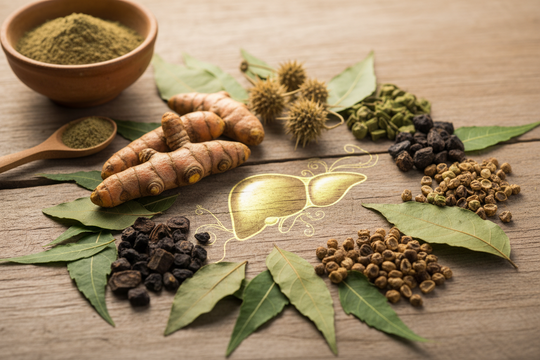
To incorporate Ayurvedic principles for healthy blood sugar support, focus on a disciplined daily routine (Dinacharya) and mindful eating. For instance, consuming 1-2 teaspoons of fenugreek seeds (Methi) soaked overnight in water, taken first thing in the morning, is a traditional practice. Fenugreek is valued for its soluble fiber, which may help slow carbohydrate absorption. Another approach involves incorporating bitter gourd (Karela) juice, approximately 30-50 ml daily, diluted with water, preferably before meals. Karela is traditionally used to support pancreatic function. Turmeric (Haridra) powder, about 1/2 teaspoon mixed with warm water or buttermilk, can be taken once or twice daily. Its “Tikta” (bitter) and “Katu” (pungent) tastes and “Ushna” (heating) potency are believed to support metabolic balance.
Meal timing is also crucial: aim for your largest meal at midday when Agni is strongest, and keep dinner light and early, ideally before 7:30 PM. This helps prevent the accumulation of Ama. Always consult a qualified Ayurvedic practitioner or a registered medical doctor before starting any new herbal regimen, especially if you have an existing health condition, are pregnant, or are taking prescription medications.
FAQs
Q: What is the primary dosha associated with imbalanced blood sugar in Ayurveda?
A: In Ayurveda, imbalanced blood sugar, or Madhumeha, is primarily associated with an aggravation of the Kapha dosha. This imbalance often stems from a sluggish digestive fire (Agni) and the accumulation of toxins (Ama).
Q: Can Ayurvedic eating principles replace modern medical treatment for blood sugar conditions?
A: No, Ayurvedic eating principles are complementary and should not replace prescribed medical treatment or a doctor's care. Always continue your prescribed medications and consult a qualified Ayurvedic practitioner or registered doctor for guidance.
Q: Which tastes are emphasized in an Ayurvedic diet for blood sugar support?
A: The Ayurvedic diet for supporting balanced blood sugar levels emphasizes “Tikta” (bitter) and “Kashaya” (astringent) tastes. These tastes are traditionally believed to help pacify Kapha dosha and reduce Ama.
Q: How does meal timing influence blood sugar according to Ayurveda?
A: Ayurveda emphasizes eating meals at regular intervals, with the largest meal at midday when Agni is strongest, and a lighter dinner consumed early in the evening. This practice supports optimal digestion and helps prevent fluctuations in blood sugar levels.
Q: Are there any specific lifestyle practices recommended alongside diet for blood sugar balance?
A: Yes, Ayurveda recommends regular, moderate physical activity like walking after meals, practicing yoga and pranayama for stress reduction, and maintaining consistent sleep patterns. These practices help improve insulin sensitivity and support overall metabolic health.